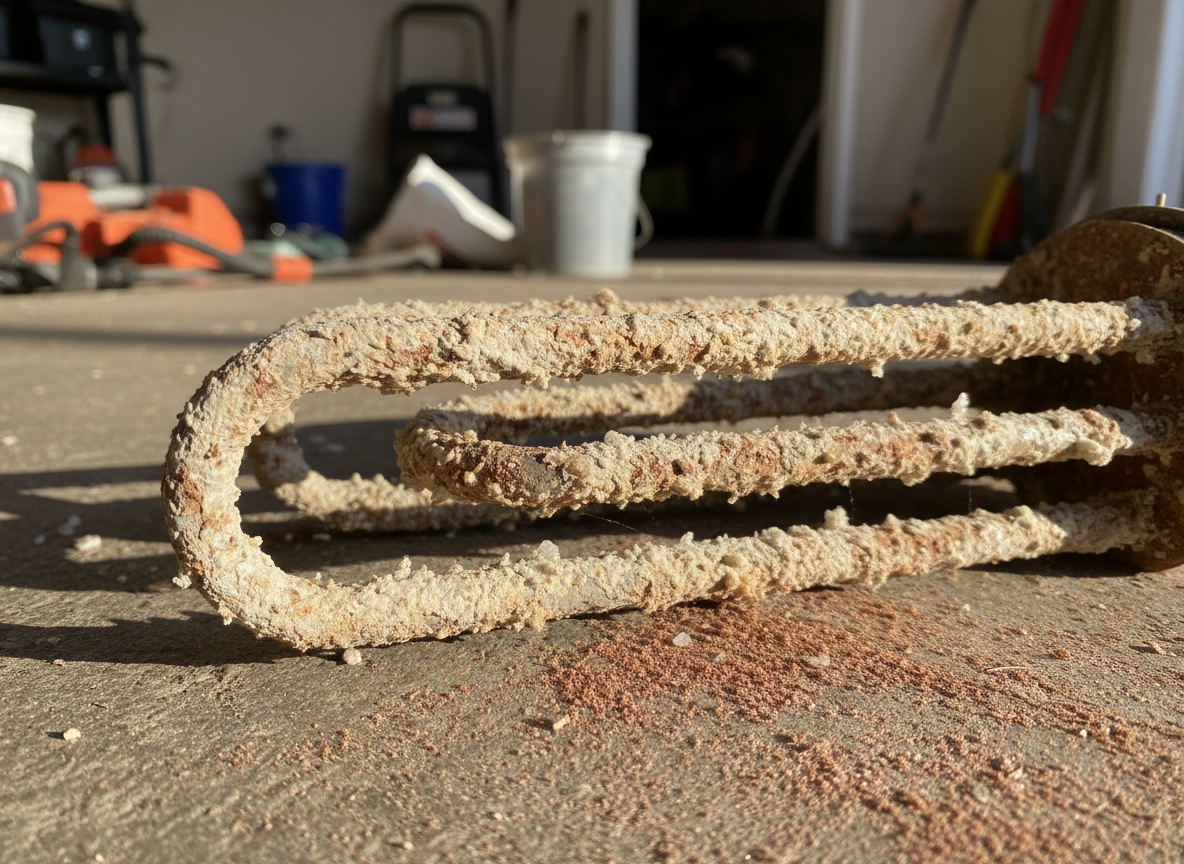
Arizona's hard groundwater deposits minerals rapidly inside tank water heaters, especially in Phoenix-area homes with garage or attic units exposed to extreme summer heat. Over time the layer of sediment makes the tank rumble or pop, slows heating and can shorten element life on electric models.
A water heater flush removes that accumulated material by draining the tank until the outflow runs clear. In higher-elevation towns such as Prescott or Flagstaff the same service also helps prevent freeze-related issues when combined with proper expansion tank settings.
Why Yearly Flushing Matters in Arizona
Hard water combined with water softeners that are not always present means most tanks benefit from an annual flush rather than waiting for noise or short showers to appear.
Common Signs a Flush Is Needed
Rumbling or popping during recovery, rusty or discolored water, and the lower element failing repeatedly all point to sediment that an independent local plumber can address with a flush.
Technician insight
In Phoenix the thing that catches most people out with Water Heater Flush is how quickly hard water builds a thick sediment layer inside attic or garage tanks that sit in 110-plus-degree heat all summer; homeowners often wait until the lower element fails instead of flushing yearly.
Water Heater Flush Services We Offer
✓Sediment Drain Flush
Removes the mineral layer that causes rumbling and protects the lower element from premature burnout in hard-water areas.
✓Hard Water Scale Removal
Targets the faster scale buildup common in Phoenix and surrounding valleys so the tank heats water more efficiently.
✓Lower Element Protection Flush
Clears sediment before it overheats and destroys the bottom element on electric models common in Arizona homes.
✓Annual Tank Maintenance Flush
Recommended yearly service in regions with very hard water to keep recovery times normal and reduce noise.
✓Rumble Elimination Flush
Drains built-up debris that produces popping and rumbling sounds during heating cycles.
✓Post-Repair Sediment Clearing
Flushes remaining sediment after element or thermostat work so the system starts clean.
How it works
- 1
Initial Assessment
An independent local plumber checks for active leaks, tests the T&P valve and confirms the type of heater before starting the flush.
- 2
Isolation and Draining
The cold-water supply is shut off, the tank is drained, and water is run until it flows clear of sediment.
- 3
Refill and Verification
The tank is refilled, air is purged, and the unit is checked for proper operation and temperature settings around 120°F.
Pricing
Pricing depends on the job and is discussed with the plumber after you call.