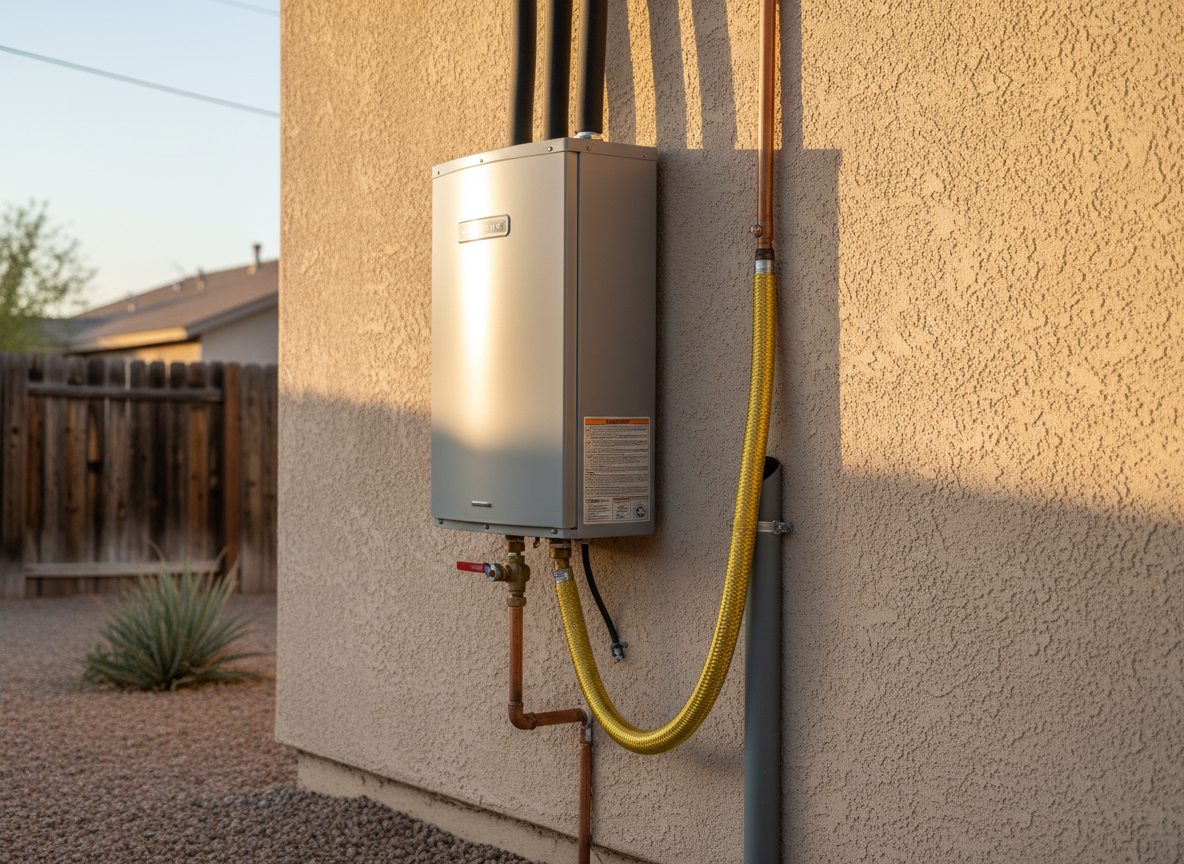
Arizona homes often need gas line upgrades when replacing a standard tank unit with a higher-BTU model or adding a tankless system. An independent local plumber calculates the correct pipe diameter based on the appliance rating, run length and elevation, then installs a full-port shut-off valve and sediment trap at the heater.
Hard water across the Phoenix metro leaves mineral sediment that can restrict gas flow over time. Proper trap placement and annual flushing of the water heater reduce the chance of burner issues caused by debris reaching the gas control valve.
Gas Line Requirements in Arizona Homes
Phoenix-area tract homes from the 1980s and 1990s frequently have ½-inch lines that are undersized for modern high-recovery heaters. An independent local plumber replaces or extends the line with the correct diameter black iron or CSST, secures it to code, and routes it away from attic heat that can exceed 140 degrees in summer.
Elevation and Freeze Considerations
In higher-elevation towns such as Prescott and Flagstaff, winter temperatures drop low enough to risk freezing. The plumber adds insulation sleeves on exposed sections and ensures the sediment trap remains accessible for seasonal draining.
Technician insight
In Phoenix, the thing that catches most people out with Water Heater Gas Line Installation is attic temperatures that soften CSST fittings over time; older tract homes also have ½-inch lines that are too small once a 199,000-BTU tankless unit goes in, so the plumber usually has to run new black iron from the meter.
Water Heater Gas Line Installation Services We Offer
✓Gas Line Sizing Calculation
An independent local plumber measures existing pipe, appliance BTU load and run distance to determine the correct diameter before any work begins.
✓Sediment Trap Installation
A trap catches debris from Arizona hard water before it reaches the burner or gas valve, extending heater life in homes without water softeners.
✓Gas Shut-Off Valve Replacement
The plumber installs a new accessible full-port valve near the water heater so future service or replacement can be performed without shutting off the entire house.
✓CSST to Black Iron Transition
Older flexible CSST runs are upgraded to rigid black iron where code requires, reducing leak points in high-heat attics common in Phoenix garages.
✓Pressure Testing and Leak Check
The completed line is pressurized and checked for leaks before the water heater is connected, confirming safe operation under local utility standards.
How it works
- 1
Site Assessment
An independent local plumber inspects the existing gas supply, measures the run, and confirms the water heater BTU rating and local permit requirements.
- 2
Pipe Selection and Layout
Correct-diameter pipe is chosen, the route is planned to avoid attic heat and obstacles, and a sediment trap location is marked near the heater.
- 3
Installation and Testing
The new line, shut-off valve and trap are installed, the system is pressure-tested, and the area is restored before the plumber leaves the site.
Pricing
Pricing depends on the job and is discussed with the plumber after you call.