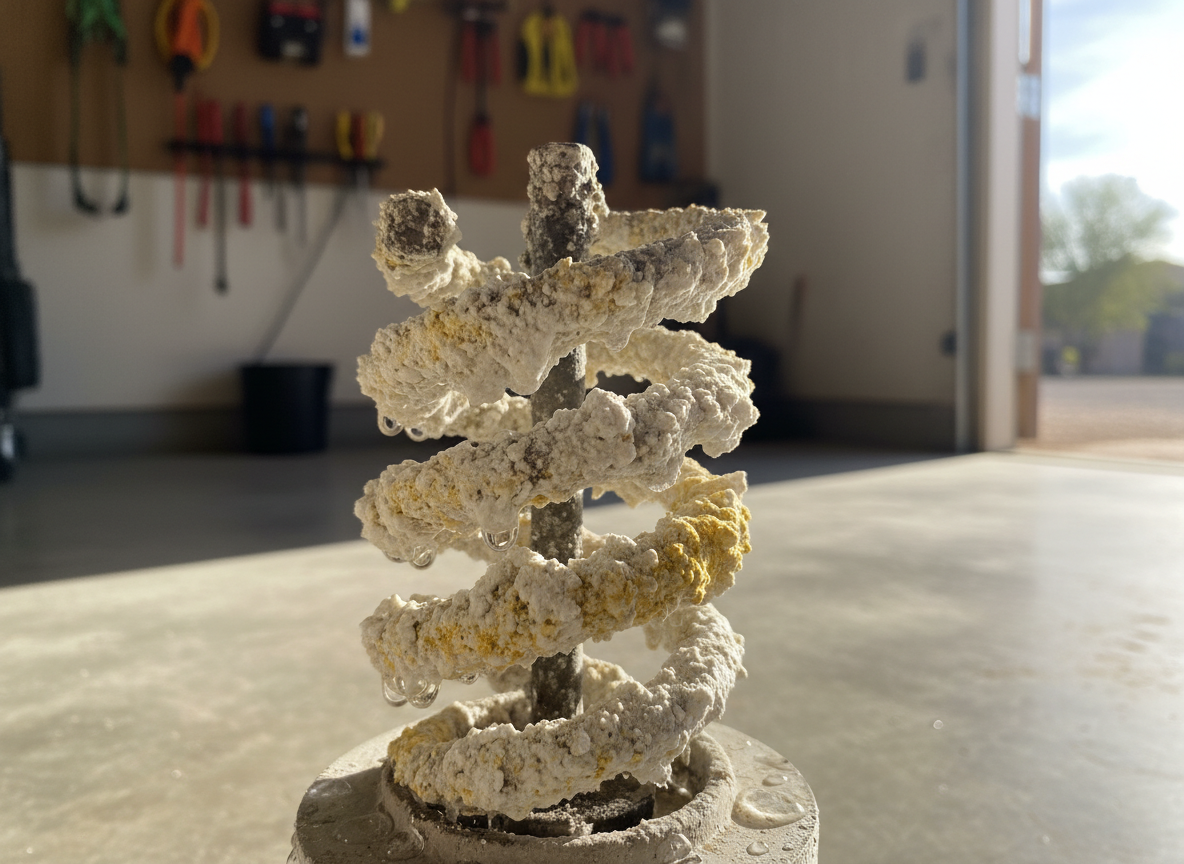
Arizona's very hard water causes fast sediment and scale buildup that forces yearly flushing on tank models and regular descaling on tankless units. An independent local plumber drains the tank until water runs clear, inspects the anode rod for corrosion, tests the T&P valve for proper release, and checks burners, elements or venting for safe operation.
Garage and attic installs common in Phoenix-area homes face extreme summer heat that accelerates wear on components. Higher-elevation towns such as Prescott and Flagstaff add freeze risk, so plumbers also verify expansion tanks paired with PRVs and confirm gas or electric supply matches the unit.
Seasonal Guidance
Winter temperatures in northern Arizona can drop below freezing, so maintenance includes checking insulation on exposed pipes and ensuring the T&P discharge line remains clear. Summer heat in the valley makes attic units run hotter, prompting earlier anode checks to prevent premature tank failure.
Common Issues in Hard Water Areas
Sediment rumbling and reduced hot-water recovery often trace back to skipped annual flushes. Tankless models develop scale on heat exchangers that triggers error codes; independent local plumbers perform vinegar or citric-acid descaling to restore flow without replacing the unit.
Technician insight
In Phoenix, the thing that catches most people out with Water Heater Maintenance is skipping the yearly flush on garage or attic tanks where hard water drops sediment fast; the lower element burns out or the tank rusts from the inside before anyone notices the rumble.
Water Heater Maintenance Services We Offer
✓Sediment Draining Service
Removes mineral buildup that causes rumbling and shortens tank life in Arizona's hard water.
✓Anode Rod Inspection
Checks the sacrificial rod that protects the tank from corrosion accelerated by local water chemistry.
✓T&P Valve Testing
Verifies the safety valve releases at correct pressure to prevent over-temperature issues common in closed systems.
✓Tankless Descaling
Dissolves scale on heat exchangers that forms quickly in Arizona's mineral-rich supply.
✓Burner and Element Check
Inspects gas burners or electric elements for efficiency loss caused by sediment and scale.
✓Venting and Expansion Tank Review
Confirms proper venting and air charge on expansion tanks required with PRVs in Phoenix homes.
How it works
- 1
Initial Assessment
An independent local plumber reviews the unit type, location and any symptoms such as rumbling or reduced hot water.
- 2
Sediment Removal
The tank is drained until water runs clear to eliminate the mineral layer that slows heating.
- 3
Component Inspection
Anode rod, T&P valve, burner or elements and venting are checked for wear or blockage.
- 4
Tankless Descaling
Scale is flushed from the heat exchanger using a solution matched to the water hardness level.
- 5
Final Verification
The system is refilled, tested for leaks and confirmed to operate at the recommended 120°F setting.
Pricing
Pricing depends on the job and is discussed with the plumber after you call.