2026-11-17 ·
Checking Water Heater Temperature Settings Before Phoenix Summer
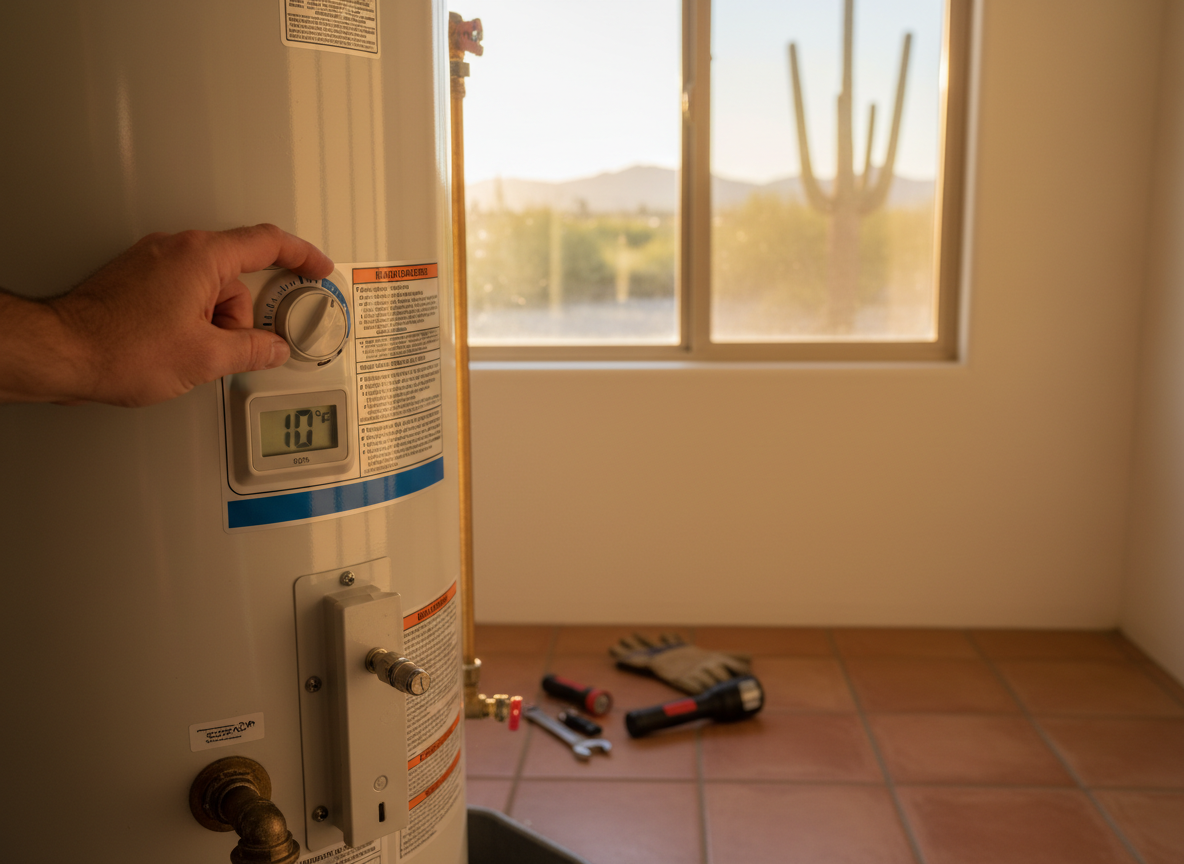
Set the water heater thermostat to 120 degrees Fahrenheit before Phoenix summer begins. This range balances safety against scalding with energy use while accounting for higher incoming water temperatures common in the region during warmer months.
Why Temperature Settings Matter Before Summer
Phoenix summers push daytime highs well above 100 degrees, which raises the temperature of water entering the tank from supply lines. A thermostat left at a winter setting can cause the unit to overheat stored water, increasing pressure on the tank and connections. Checking the dial or digital control early prevents unnecessary cycling that shortens component life. An independent local plumber can verify the actual outlet temperature with a gauge because the control knob often drifts from calibration over time. Homeowners in Phoenix neighborhoods notice faster sediment buildup when temperatures run high, and the linked guide on hard water explains how mineral layers compound the effect. Adjusting before the heat arrives keeps the system stable through peak months.
Checking the Thermostat on Common Models
Locate the access panel on an electric unit or the dial near the burner on a gas model, then use a thermometer at the nearest hot faucet to confirm output. Electric heaters often have two thermostats that must match within 5 degrees. Gas models require removing the outer door and turning the dial clockwise or counterclockwise to the 120 mark. Digital units display the current setting on a screen and allow button adjustments in 1-degree increments. Record the reading before any change so the original value can be restored if needed. If the control feels stuck or the display shows an error code, contact an independent local plumber through the troubleshooting service page for inspection rather than forcing the adjustment.
Effects of High Ambient Heat on Settings
When outdoor temperatures climb, the water heater sits in a warmer environment that reduces standby heat loss yet can push internal temperatures higher than intended. This situation raises the risk of the temperature-pressure relief valve activating during the day. Lowering the setting by 5 to 10 degrees from a typical winter value compensates for the extra ambient warmth while still delivering comfortable water at fixtures. Phoenix homes with units installed in garages or utility closets experience the greatest swing because these spaces absorb roof and wall heat. Monitoring the setting monthly through early summer confirms the adjustment holds and prevents repeated relief valve discharges that lead to mineral deposits around the valve.
When Professional Adjustment Is Advised
Homeowners comfortable with basic tools can handle the initial check, yet units older than eight years or those showing inconsistent temperatures benefit from an independent local plumber visit. A technician can test the thermostat accuracy, inspect wiring or gas connections, and confirm the pressure relief valve functions at the new setting. The maintenance service page outlines what a full seasonal inspection includes. If the heater is a tankless model, temperature controls sit on the front panel and often require a different procedure that pairs with descaling when hard water is present. Linking to the hard water article provides additional context for Phoenix properties where mineral content accelerates wear on sensors and heat exchangers.